By the early 2000s, Burberry's beige, red, and black check pattern, a design the company had used on coat linings since the early twentieth century, had become one of the most visible and most counterfeited fashion symbols in the United Kingdom. The pattern appeared on caps, bags, and clothing associated with a specific tabloid stereotype of working-class excess, and its association with that stereotype became so pronounced that some UK nightclubs and pubs reportedly began turning away customers wearing it. Burberry, under chief executive Rose Marie Bravo, responded over the following several years by deliberately scaling back the check's visibility across its product line, restricting it to a smaller share of items and repositioning the brand around subtler design cues instead of the pattern that had made it recognizable in the first place.
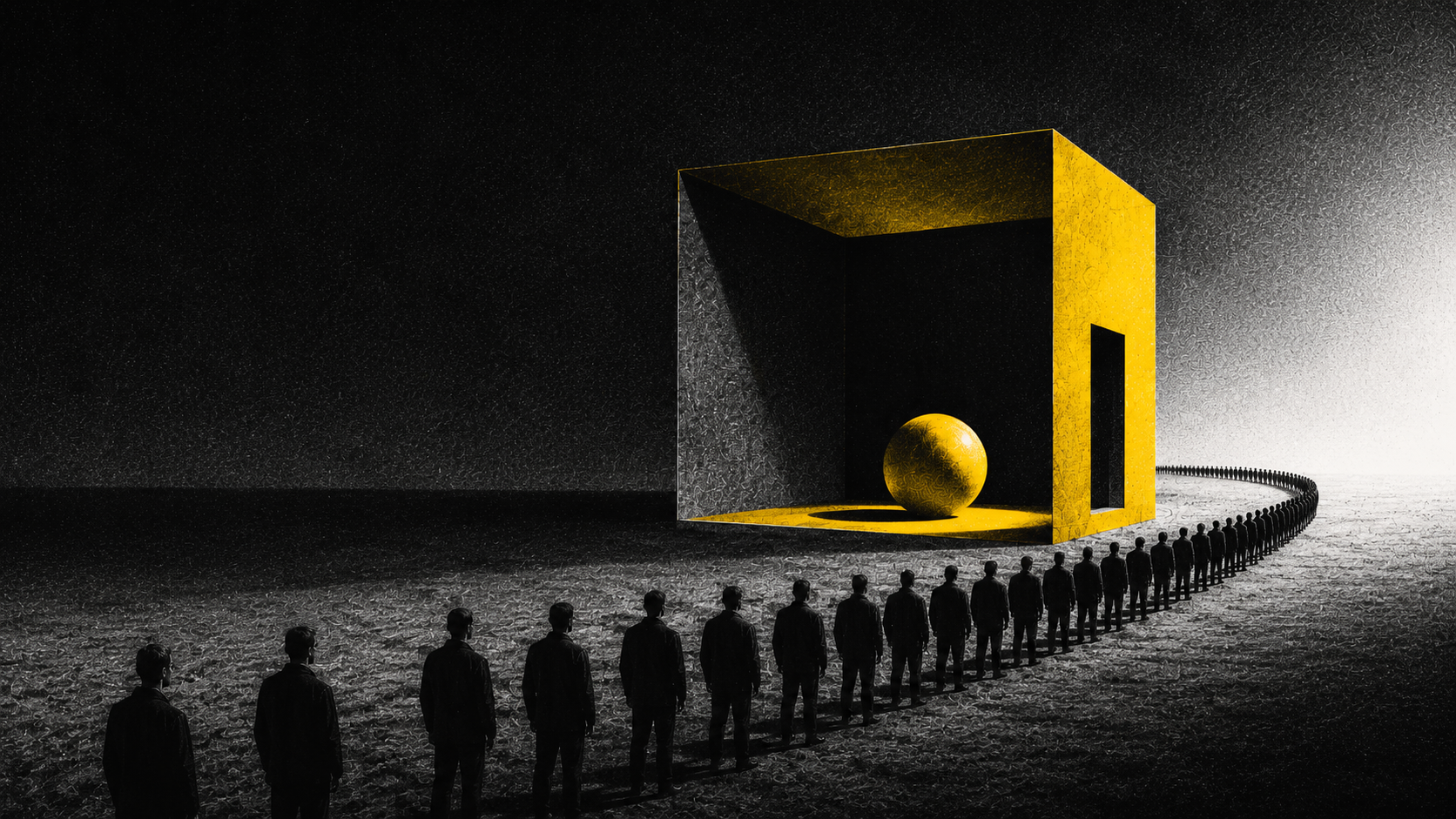
Burberry's check failed for the same reason any signal fails: too easy to reproduce and too widely worn, and once nearly anyone could signal association with the brand, the signal stopped functioning as a marker of anything scarce.
Two decades later, an Italian company that had spent most of its history deliberately avoiding the opposite mistake found itself the unexpected beneficiary of a similar cultural moment, for the opposite reason.
A cap nobody outside a narrow circle could name
Loro Piana, founded in 1924 in the Piedmont region of Italy and majority-acquired by LVMH in 2013, had built its reputation for decades on cashmere and vicuña textiles sold with almost no visible branding: a small tricolor flag stitched discreetly onto shoes, a nearly unmarked cap retailing for several hundred dollars. When HBO's Succession, which aired its final season in 2023, dressed several of its characters in the brand's understated pieces, online commentary quickly identified Loro Piana as the visual shorthand the show's costume design had chosen for old, unbothered wealth specifically because almost nobody outside a narrow, wealthy circle could recognize the brand on sight.
The joke that spread across social media in the months that followed was that a person could be standing next to several thousand dollars of Loro Piana cashmere and have no way of knowing it, unless they already possessed the specific knowledge required to identify it.
What Castiglione named five centuries earlier
The Italian writer Baldassare Castiglione, in his 1528 work The Book of the Courtier, described an ideal quality he called sprezzatura: a studied nonchalance, a deliberate concealment of effort behind an appearance of natural ease, such that a courtier's evident skill would look effortless to anyone watching closely enough to notice it, and invisible to anyone who was not. Savile Row tailoring, developed centuries later in London's bespoke suit trade, operated on a closely related logic: a suit's quality, the drape of a shoulder, the hand-finished buttonholes, was built to be legible specifically to people who understood tailoring, while appearing to anyone without that knowledge like an ordinary suit.
The specific brands and eras change. The mechanism Castiglione named in 1528 and Burberry rediscovered by accident in the 2000s is the same one Loro Piana benefited from in 2023: a status signal that reveals itself only to people equipped to recognize it survives being copied in a way a purely visible signal cannot.
Why a logo stops working once everyone has one
Economists use the term positional good to describe something valuable specifically because not everyone can have it, where the value depends on relative scarcity rather than on the object's absolute quality. A visible logo functions as a positional good only for as long as it remains difficult to acquire or difficult to convincingly counterfeit. Once counterfeiting becomes cheap, as it had for Burberry's check by the early 2000s, or once mass-market retailers can approximate the aesthetic at a fraction of the cost, a visible logo stops signaling scarcity and starts signaling the opposite: that its wearer needed to be recognized because they had no subtler way of proving anything.
Taste, in the sense that Loro Piana's near-invisible branding depends on, resists this failure mode because the scarce resource was never the physical object. It is the accumulated knowledge required to select it, recognize it, and understand why a specific choice matters, knowledge that takes time and exposure to build and that cannot be reproduced simply by copying a visible pattern.
The brands that never advertise their own drops
Aimé Leon Dore, founded by Teddy Santis in New York in 2014, and Kith, founded by Ronnie Fieg in 2011, both built substantial cultural influence through limited, frequently rotating product drops rather than sustained mass availability. In both cases, the product itself is often unremarkable to an outsider; the actual value lies in knowing when a specific drop occurs and understanding, from a fluency with the brand's history, why a particular colorway or silhouette matters to people already inside that community.
A comparable shift has occurred in specialty coffee, where a growing segment of the market has moved away from visible, widely recognized branding toward single-origin offerings described in terms of processing method and fermentation technique, language that requires real, accumulated knowledge to discuss competently and that functions as a fluency marker in the same way recognizing a Loro Piana cap does, inside a different category entirely.
What could bring logomania back
As AI-assisted design tools continue to make convincing visual imitation faster and cheaper to produce, direct-to-consumer brands may be able to replicate a given luxury aesthetic within weeks rather than the seasons it once required, and the premium on taste-based signals, the kind that cannot be shortcut simply by copying a visible pattern, should continue rising relative to visibility-based ones.
The clearest way this forecast fails is if fashion's well-documented cyclical pattern reasserts itself and a generation that has grown up entirely inside the quiet-luxury era eventually finds loud, legible branding novel again, simply for never having lived through its earlier exhaustion. If that happens, it will not disprove the underlying mechanism. It will mean the positional good has, as it has for over a century, briefly relocated back toward visibility before scarcity forces it to move again.
What Burberry eventually understood
Burberry's recovery over the following decade, under successive leadership that gradually reintroduced the check in more controlled, limited formats, was built on the same insight Loro Piana never had to learn the hard way: a signal recognized by everyone stops being a signal at all. Loro Piana's cap was never designed to be recognized by a crowd. It was designed to be recognized by the small number of people already equipped to notice it, and that smaller, harder-earned audience turned out, over time, to be worth considerably more than the crowd Burberry's check briefly won and then had to spend a decade trying to win back on different terms.
Engine
A few things follow for anyone building a brand today.
The first is what actually gets protected as scarce. A logo can be protected legally, but its cultural scarcity erodes the moment it's copied convincingly enough. Taste-based positioning has to protect something harder to copy: a specific point of view, a body of knowledge, a history a newcomer brand simply hasn't had time to accumulate.
The second is who the message is actually built for. A campaign built to be understood by everyone is, by this logic, building the wrong kind of signal. The Loro Piana cap wasn't designed to be recognized by a crowd. It was designed to be recognized by the twelve people in the room who already knew what to look for, and that smaller, harder-won audience turned out to be worth more than the crowd would have been.
The third is patience with the audience that seems too small to matter yet. A taste-based signal takes longer to build than a visible one, because it depends on accumulated fluency rather than a single recognizable image. The brands that get there first are rarely the ones chasing the widest possible reach. They're the ones willing to be invisible to almost everyone, on purpose, for long enough that the few who do recognize it feel like they found something rather than were sold something.