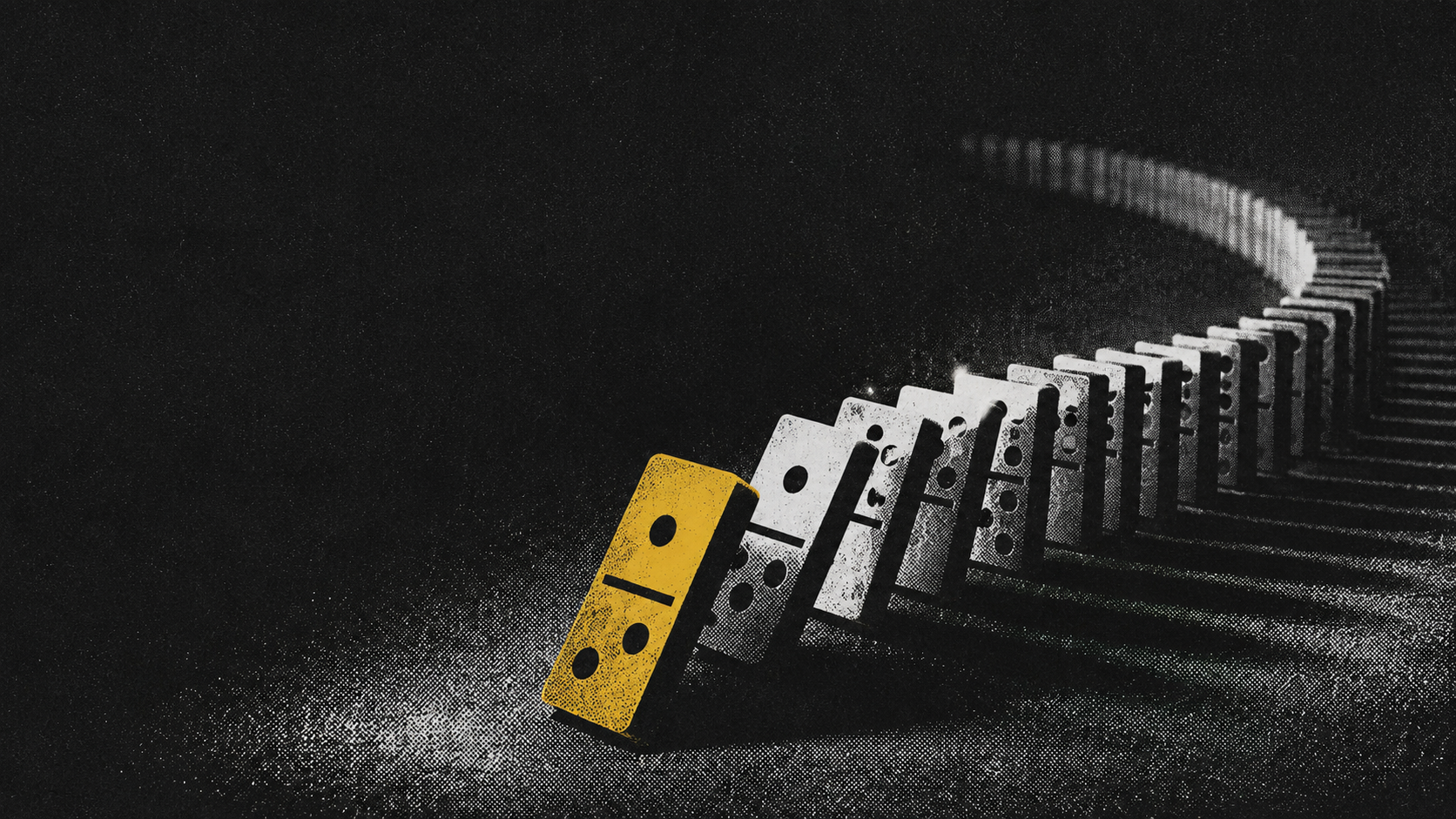
In 1995, recording an album required booking studio time, hiring an engineer, and paying for equipment few musicians could access on their own. Today, an AI model can write, produce, mix, and master a passable song from a short prompt in under an hour, and release it to every major streaming platform before dinner. By the following morning, that song sits on Spotify beside tens of thousands of others uploaded the same day, most of which no human being will ever press play on. Spotify's own reporting has put daily upload volume in the tens of thousands of tracks, a figure that keeps climbing as AI tools push the cost of finishing a song toward zero. This is not a failure of quality. It is a failure of arithmetic: more things asking for attention than there are hours in which to give it.
What the Printing Press Actually Made Scarce
Johannes Gutenberg's printing press, introduced in Mainz around 1440, did not eliminate the scarcity involved in producing written work. It relocated it. Before the press, the expensive part of a book was copying it by hand, a process that could occupy a scribe for months. Once movable type made reproduction fast and cheap, historians estimate more than twenty million books had been printed across Europe within roughly fifty years, a volume no scribal system could have approached. Every revolution since has told the same story: it does not eliminate scarcity, it relocates it.
Radio and, later, cable television repeated the pattern generations apart, each making a form of content dramatically cheaper to produce and transmit without increasing the number of hours in a day available to consume it, which meant the competitive pressure in both cases eventually moved from access to the medium toward the attention of whoever was already using it.
The Infrastructure UPS Eventually Needed
Business history shows the same pattern from the opposite direction. In 2012, Sacha Poignonnec and Jeremy Hodara, two former McKinsey consultants, launched an online marketplace in Lagos under Rocket Internet's Africa Internet Group, later renamed Jumia. The hard part, they discovered within their first year, was never listing products online. It was the fact that no reliable delivery network existed to move a package across cities with fragmented addressing systems and postal services that could not be trusted to move goods reliably even a short distance.
Jumia spent years building that logistics network itself, market by market, until it covered thousands of pickup points across eleven countries. By 2022, the infrastructure had become valuable enough on its own that UPS and the Chinese logistics firm 4PX both signed agreements to use Jumia's last-mile network specifically to reach African customers, agreements built around the delivery infrastructure Jumia had spent a decade constructing, not around the storefront the company had originally set out to build.
The Migration, Mapped
The printing press made books abundant. Attention became scarce. The internet made information abundant. Trust became scarce, since anyone could publish anything and almost nothing distinguished a claim worth believing from one that wasn't. Social media made publishing itself abundant. Distribution became scarce, since having an account was no longer the same as having anyone see what was on it. Artificial intelligence is now making creation abundant. What's becoming scarce is judgment: the ability to decide what's actually worth making, publishing, or building in the first place, now that the mechanical part of doing any of it costs almost nothing.
GitHub Copilot and tools like it make this concrete in a single profession. Writing code, for decades one of the most valuable skills in the economy, is becoming close to free to produce at a mechanical level. The engineer who remains scarce isn't the one who can type the fastest. It's the one who knows what to build, why, and how to judge whether the AI's output is actually correct. The same migration is underway in law, translation, and design: the scarce professional was never the one doing the task. It's becoming the one who knows which task is worth doing.
Netflix's Actual Competitor
In a 2017 shareholder letter, Netflix co-founder Reed Hastings wrote that the company's genuine competition was not other streaming services but sleep, a framing that treated every hour a subscriber spent elsewhere, a football match, a group chat, another platform entirely, as an hour Netflix had to compete for regardless of category. The letter was widely reported specifically because it broke from the industry habit of benchmarking against direct rivals, and it visibly shaped Netflix's later content decisions.
Vine, the short-form video app Twitter acquired in 2012 and shut down in October 2016, shows the harder version of the same lesson. Creators who had spent years building audiences of millions lost access to those audiences within weeks, because the platform, not the individual creator, had always technically owned the relationship. Jumia drew the inverse lesson from a more physical version of the same risk, building and owning its delivery network rather than depending on couriers that couldn't reliably serve the markets it needed, a decision that by 2022 had turned a Lagos startup into infrastructure a global logistics company found worth partnering with.
Distribution cannot rescue a product that does not deserve to be found. The pamphlet still had to contain an idea worth repeating aloud. Jumia's packages still had to arrive and be worth ordering again. Distribution decides whether something gets the opportunity to be judged. It has never been a substitute for surviving that judgment once it arrives.
When the Gatekeeper Returns
As AI drives the cost of creation toward zero, the list of things that become newly scarce keeps extending: trust, taste, distribution, ownership, community, reputation, speed, and judgment all start behaving like the constraint used to behave when creation itself was hard. More companies and creators should be expected to shift investment away from producing additional content and toward owning the direct channels, a list, a network, a community, through which that content actually reaches people, the same calculation Jumia made with logistics years before its scale made the decision look obvious.
The clearest way this fails is if a sufficiently powerful discovery layer, an AI-driven recommendation system deciding what nearly everyone sees regardless of whether a creator has built a direct relationship, emerges and makes owned channels less decisive than they currently are. If that happens, the pattern will not have broken. The constraint will simply have relocated again, to whoever controls that layer.
Engine
The companies that win the next decade won't necessarily create more than anyone else. They'll own whichever scarce thing creation now depends on to be found, believed, and remembered. When everyone can generate, whoever controls discovery wins. When everyone can publish, whoever owns trust wins. Scarcity never disappears. It simply changes address, and the musician releasing a song into tomorrow morning's flood of tens of thousands of others is facing, in miniature, the exact problem Jumia solved at continental scale and Gutenberg's printers faced in Mainz nearly six centuries ago. The difficulty was never making the thing. It was building, ahead of time, some way for the thing to find someone who was already going to want it.